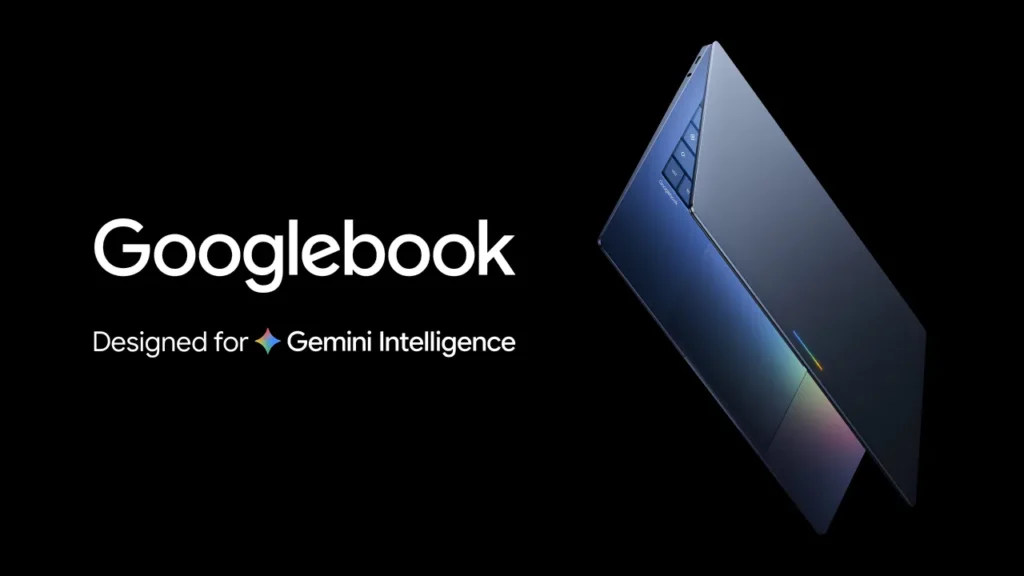
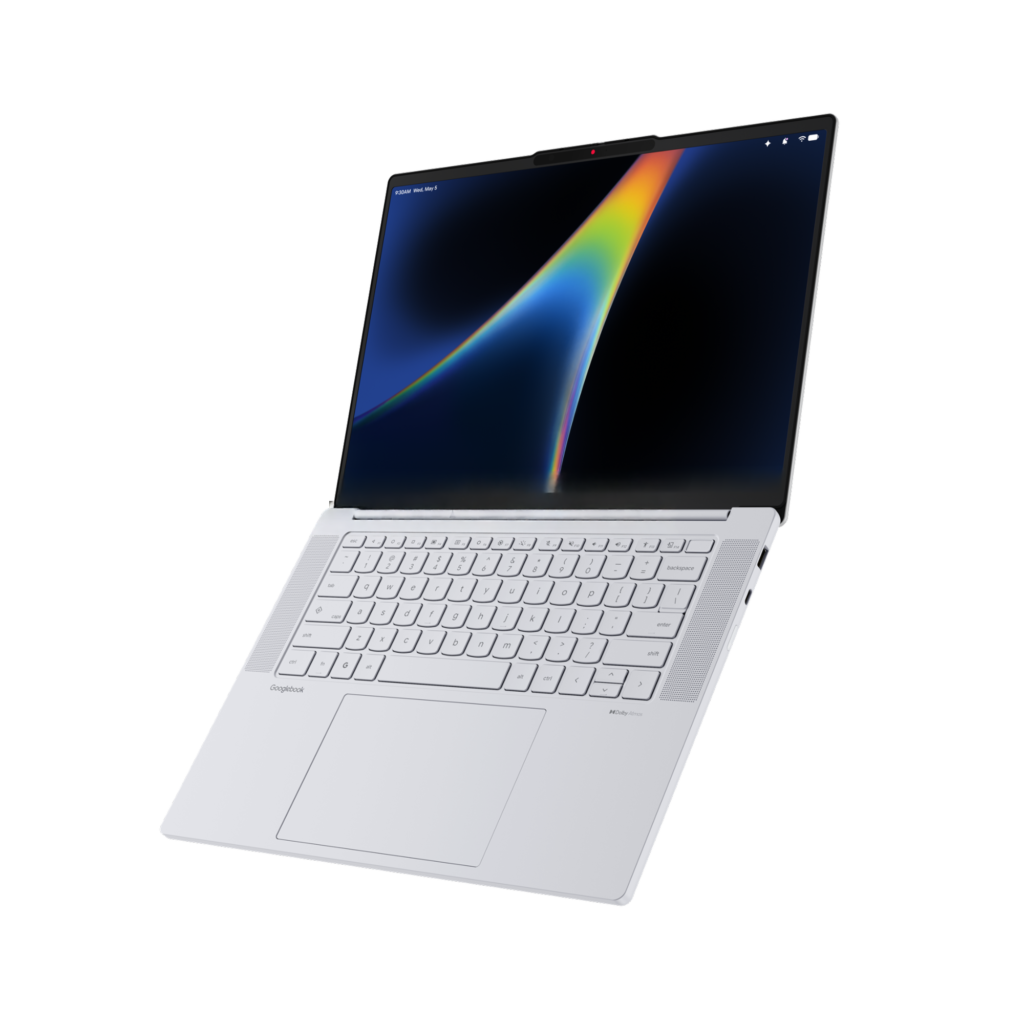
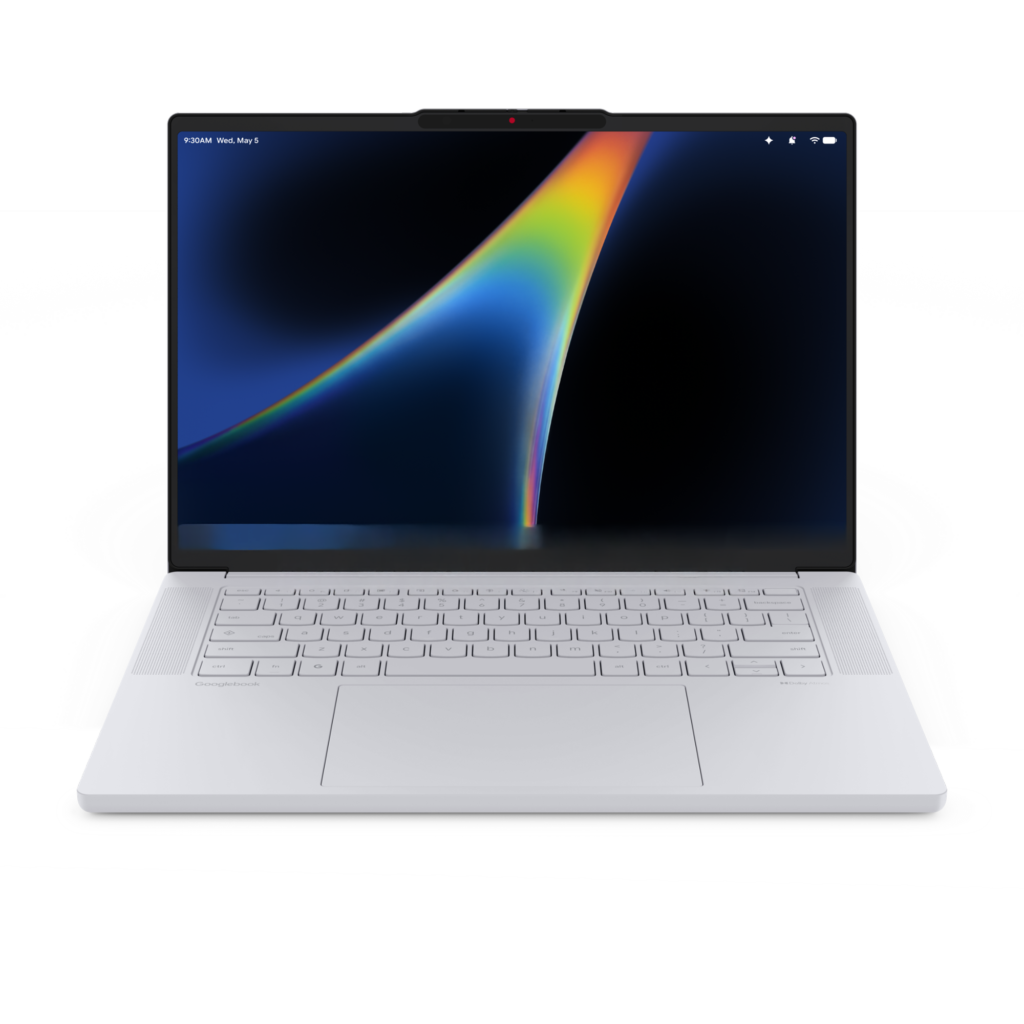
The Lenovo Googlebook 15 is the first machine that makes Aluminium OS feel like a product rather than an announcement. Everything about it — from the key that replaced Windows to the shutter hiding in the notch — is built around a single premise: your laptop should run the same software as your phone, and be taken seriously anyway.
A keyboard redesigned around Gemini
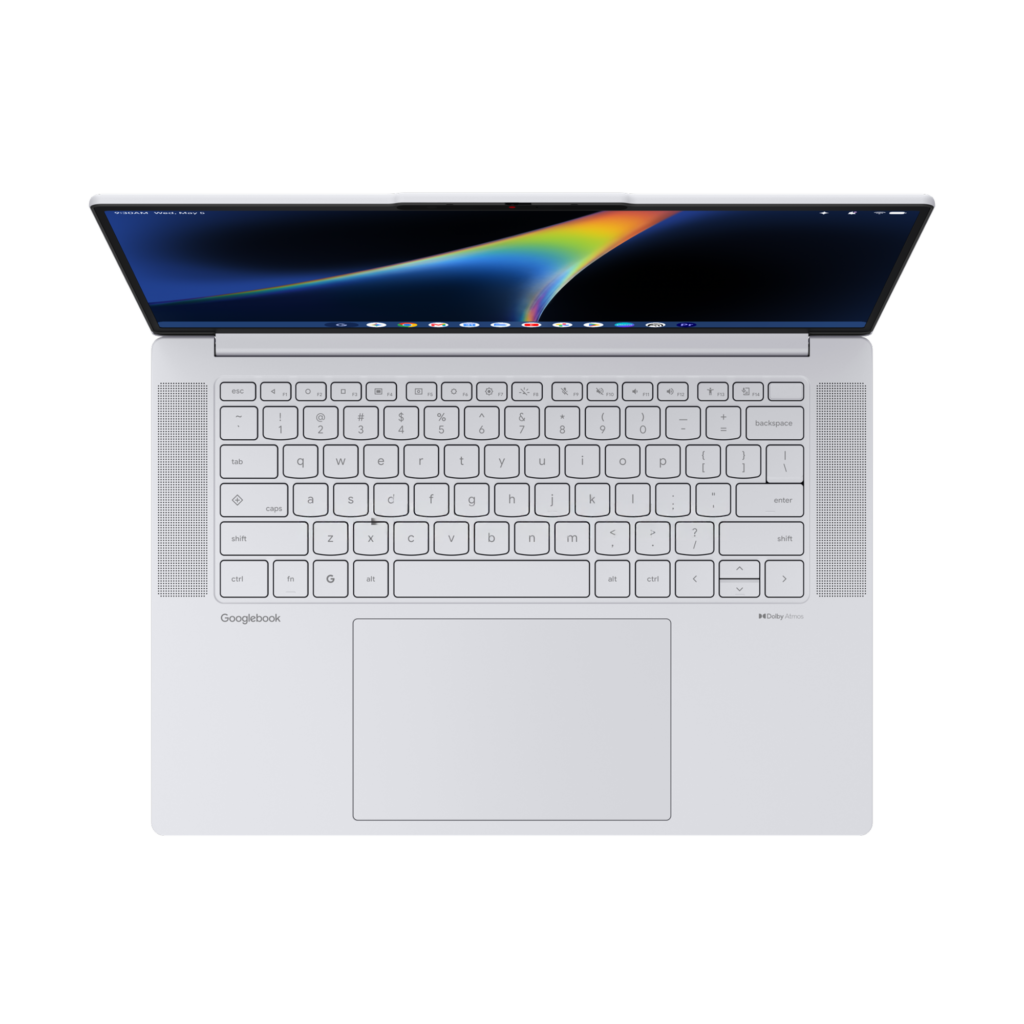
The bottom row is where the platform declares itself. Between Fn and Alt, where the Windows key has sat since 1995, there is now a dedicated Gemini key marked with a stylized “G.” It’s a hardware commitment, not a remappable shortcut — one keystroke to a system-level assistant that can see screen context and act across apps.
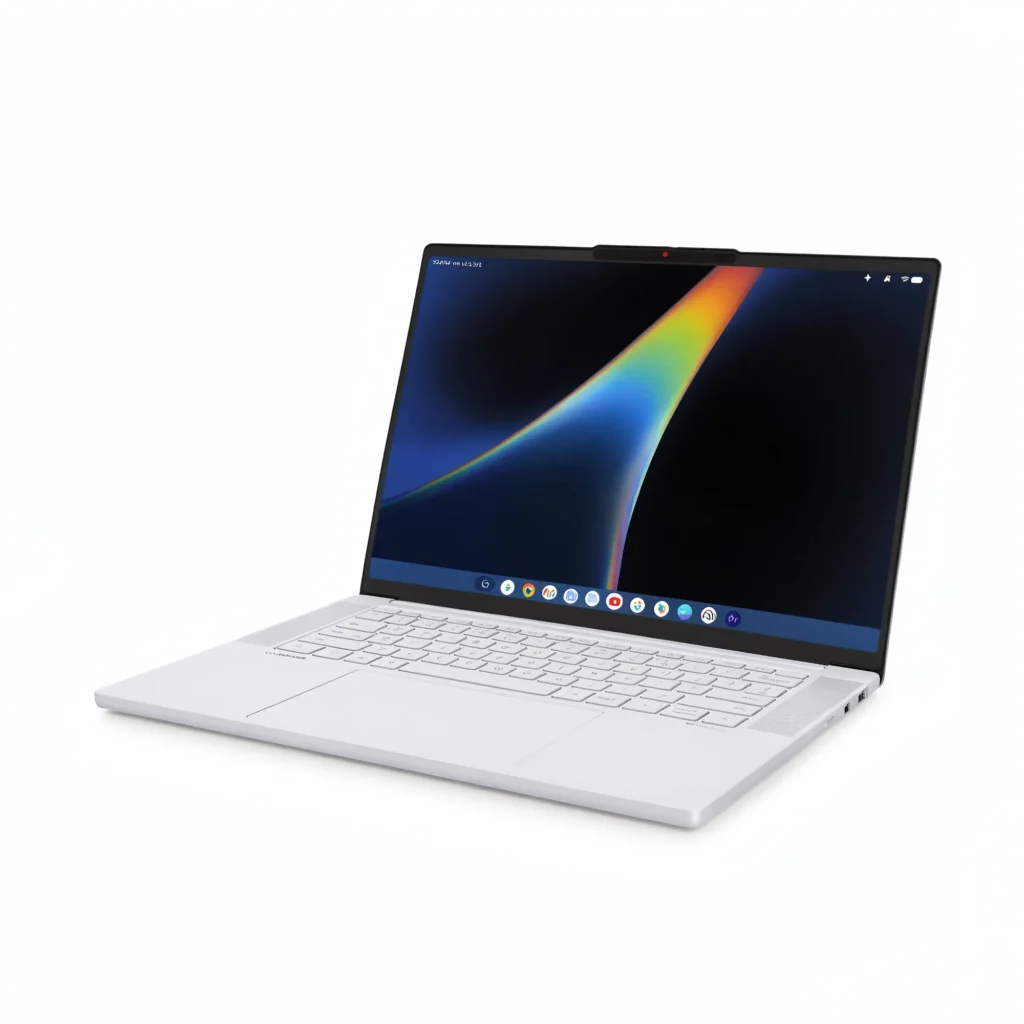
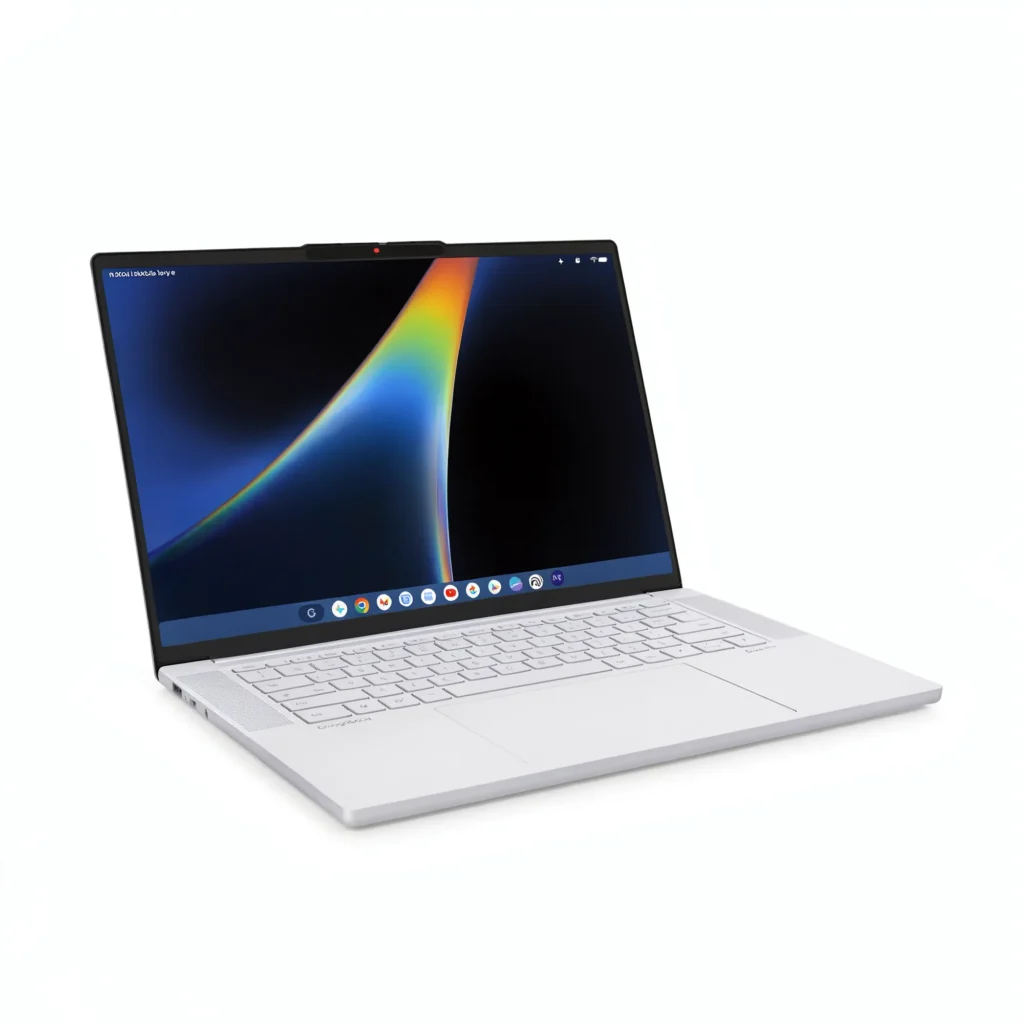
Caps Lock shares duty with a launcher toggle, a Chromebook convention that survived the transition. The function row runs to 14 keys covering back, refresh, window overview, screenshots, brightness, keyboard backlight, mic and speaker mute, volume, an accessibility toggle and a profile switch. There’s no number pad on this 15-inch chassis, which keeps the keyboard centred and leaves room for an unusually large trackpad.
The palm rest reads “Googlebook,” not IdeaPad or ThinkPad. Lenovo’s wordmark appears only on the lid.
What Aluminium OS actually is
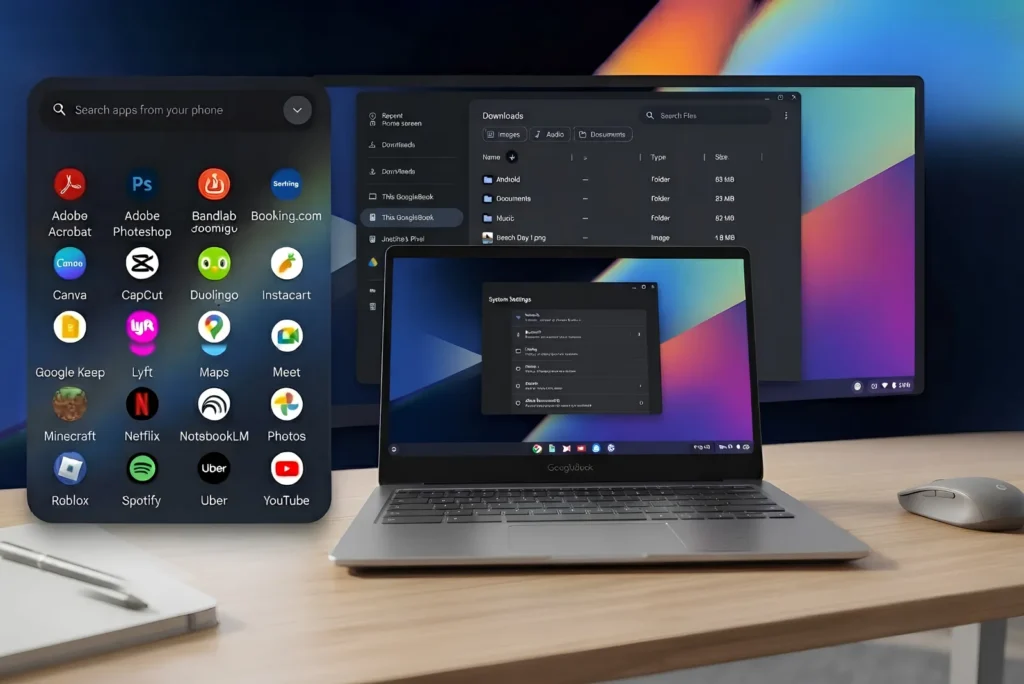
Aluminium OS is Android 17 rebuilt for desktop hardware, not ChromeOS with Android bolted on. That distinction is the whole story. Chromebooks ran Android apps inside a container called ARC (Android Runtime for Chrome), a compatibility layer that cost performance and limited how deeply apps could integrate. Aluminium OS removes the container entirely — Play Store apps run natively, and the system can reach directly into files on a paired Android phone.
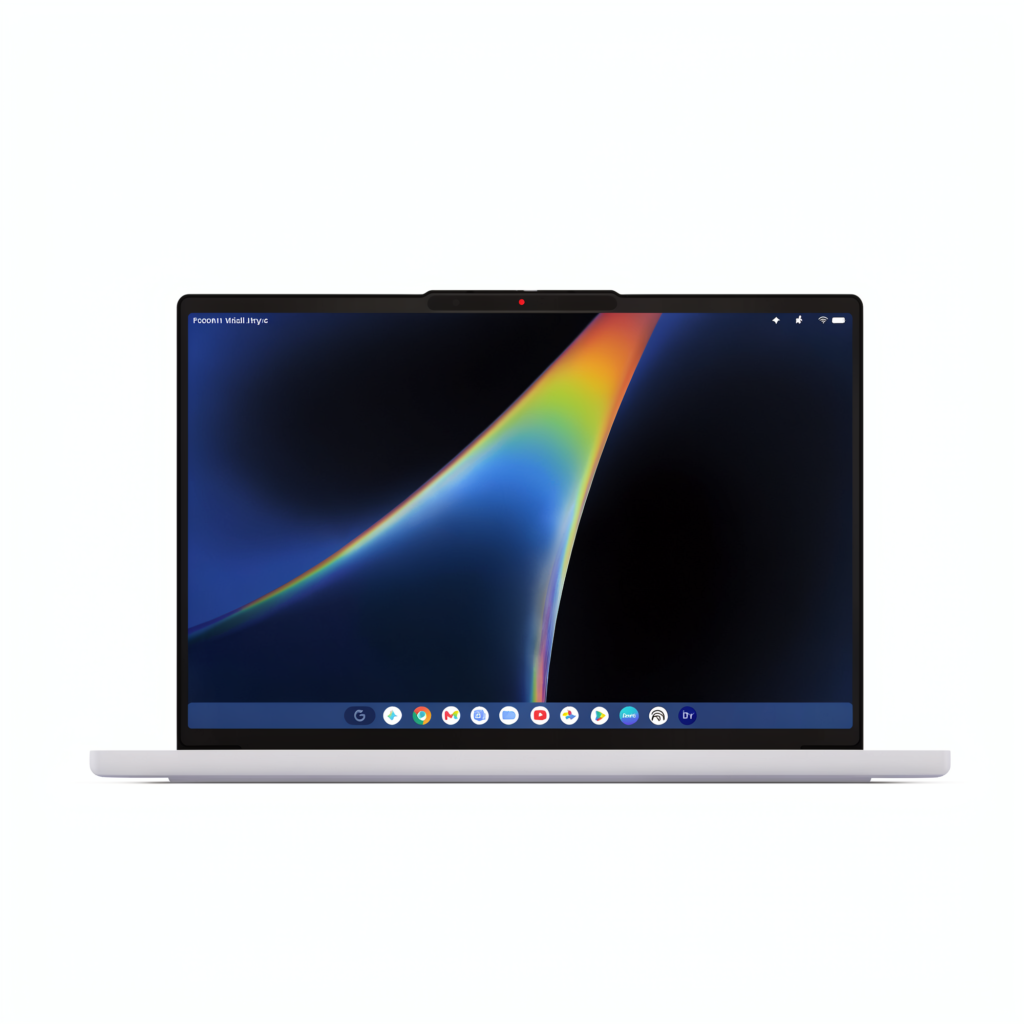
Desktop behaviour is layered on top of Android’s own UI stack: windowing built on Jetpack WindowManager with Material 3 Adaptive handling multi-pane layouts, plus a proper taskbar and virtual desktops. The visible result is a phone-style status bar across the top of the screen — time and date left, Gemini indicator, notifications, Wi-Fi and battery right. It looks odd on a laptop for about ten minutes, then it just looks like Android.
Gemini also rewires the cursor. A feature called Magic Pointer lets you wiggle and point at something on screen, then offers contextual actions — turn a date in an email into a calendar event, or select two images and ask for them to be combined.
The dock in the shipping interface tells you the audience: Gemini, Chrome, Gmail, Calendar, Files, YouTube, Photos, Play Store, Canva and Adobe Premiere Pro. A professional video editor in the default taskbar is Google’s clearest signal that Googlebooks are not meant to inherit the Chromebook reputation.
Hardware that backs the claim
The port selection is generous for a thin machine: full-size HDMI, two USB-C ports (one on each side, so charging works from either), USB-A, an SD card reader and a 3.5mm jack. No dongle required for a monitor or an old flash drive.
The 15-inch display carries slim bezels on all four sides, with the webcam housed in a small top notch. Inside that notch sits a physical privacy shutter alongside a red activity indicator — a mechanical cover software cannot override, which matters more than usual on a device with a persistent assistant that reads screen content.
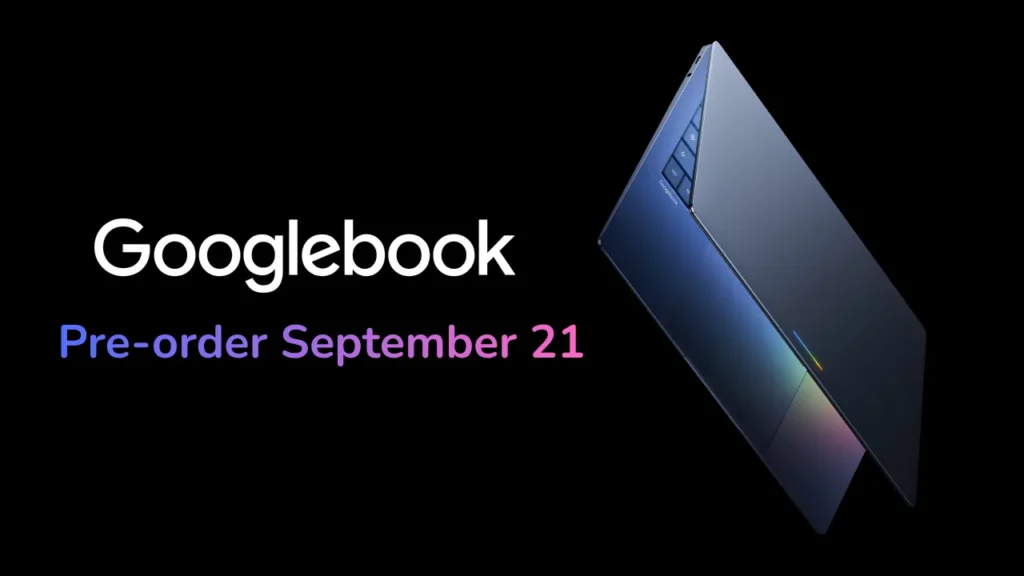
Audio looks serious: perforated upward-firing grilles flank the keyboard, side-firing cutouts sit on the base, and a Dolby Atmos badge appears on the palm rest, pointing to a four-speaker arrangement. The finish is a light silver-white rather than the usual dark aluminium, and the underside is textured with fine horizontal ridges instead of a flat plate. The hinge lays back to 157.5 degrees, near flat for sharing a screen across a table. A thin Pixel Glow Bar on the lid’s top edge animates with Gemini activity — a platform-tier marker Google requires on flagship Googlebooks.
Still unconfirmed
No chipset, resolution, memory, storage, battery capacity or price. The silicon choice is the one worth waiting on: because the OS is Android-native, an Arm design from Qualcomm or MediaTek is now viable in a way it never was under ChromeOS, and it will shape battery life and enterprise manageability more than any design detail. Google has said Googlebooks will sit above Chromebook pricing, and 2026’s memory shortage won’t help.
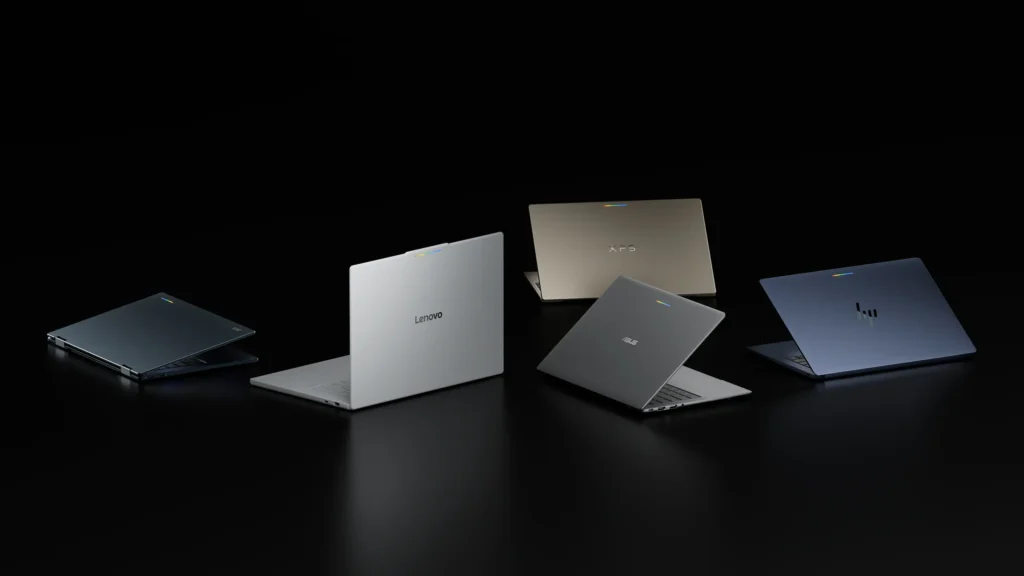
Lenovo is expected to reveal the Googlebook 15 around IFA in Berlin, opening September 4, with retail availability in the fall alongside models from Acer, ASUS, Dell and HP.