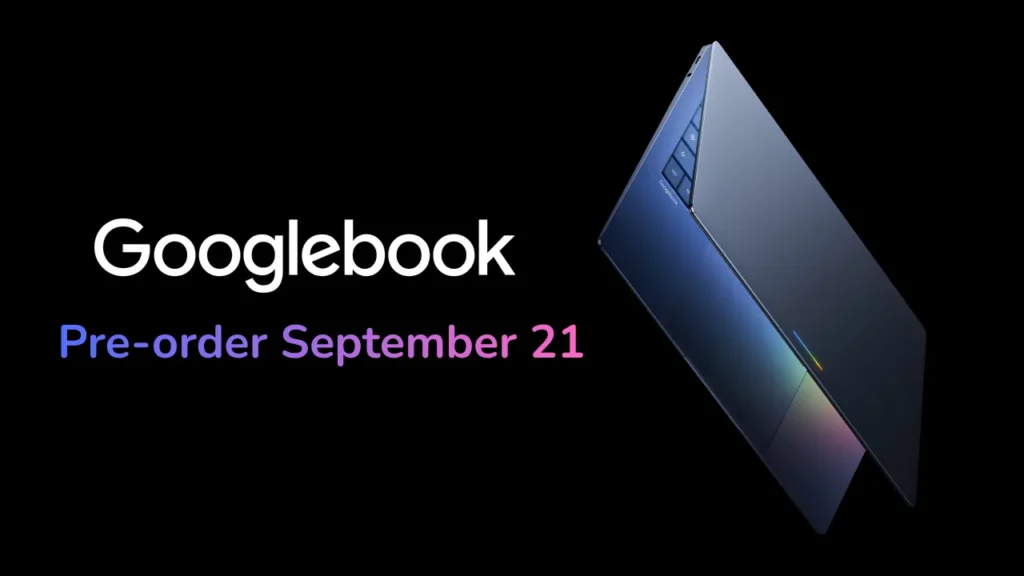
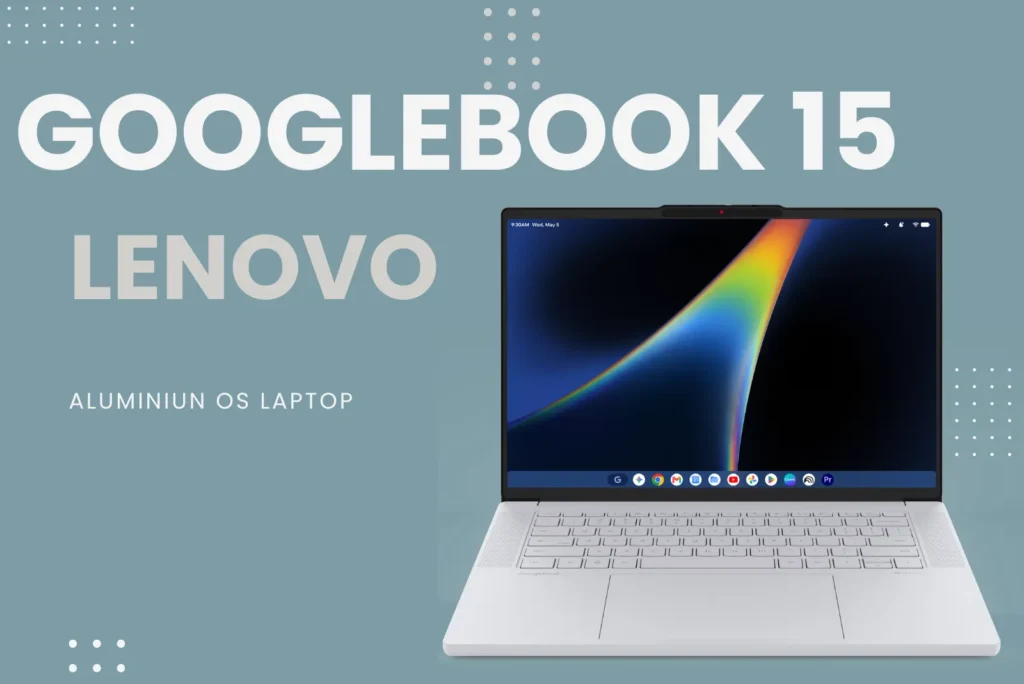
Google will give Googlebook its first real public showing on Tuesday, September 15, 2026, at an in-person media event in New York City. Invitations went out on August 18, and they confirm what four months of leaks have been building toward: a keynote, working hardware from all five launch partners, and — at last — a name for the operating system.
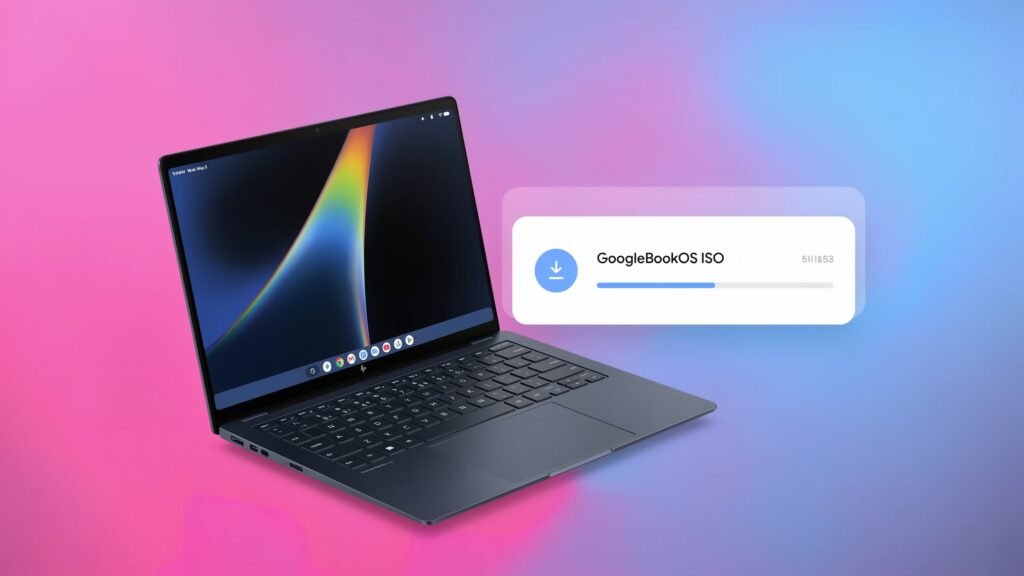
That last part matters more than the date. Aluminium OS has never been an official name. It is a codename we pulled out of Chromium commits and certification filings, and it has stuck only because Google left a vacuum. On September 15, Google fills it.
Table of Contents
The Short Version
- Date: Tuesday, September 15, 2026, in New York City.
- Format: in-person media preview. No start time announced, and no public livestream confirmed as of August 19, 2026.
- On the agenda: a keynote from Google leadership, demo stations from every launch OEM and a media sandbox where reporters can photograph, film and benchmark the machines.
- Not on the agenda: a retail on-sale date. This is a preview, not a store launch.
- Six first-wave Googlebooks are already accounted for through certification databases. The full table is below.
What Happens on September 15
The invitation lays out three parts to the day.
The keynote comes first, delivered by Google leadership, and it covers the computing platform, the software architecture underneath it, and the case for merging ChromeOS web productivity with Android’s native code base. Then come demo stations, one for each of the five launch partners. Then a media sandbox with hands-on access — reporters will be able to photograph, film and run benchmarks on the hardware.
That third item is the one we would flag. Handing benchmarking access to a room full of journalists is not something a company does with software that is still six months from ready. It reads as confidence, and it suggests the builds on those machines are close to final.
Why New York and Not IFA Berlin
IFA 2026 opens in Berlin on September 4, eleven days ahead of Google’s event. A brand-new laptop category would have found a ready audience there, and plenty of people expected exactly that. Google skipped it.
The logic is not hard to follow. At IFA, Googlebook competes with every other exhibitor for attention, and the story fragments across five separate OEM press conferences instead of pointing at one Google stage. New York keeps the narrative in one place.
There is a second signal in the calendar. Google held Made by Google in New York on August 12 for the Pixel 11 family, Pixel Watch 5 and Pixel Tag — and kept Googlebook out of it entirely, saying only that more was coming this fall. Two New York events five weeks apart is not scheduling drift. Google wanted this platform to have a news cycle of its own rather than a slot near the end of a Pixel keynote.
The Six Googlebooks Already Accounted For
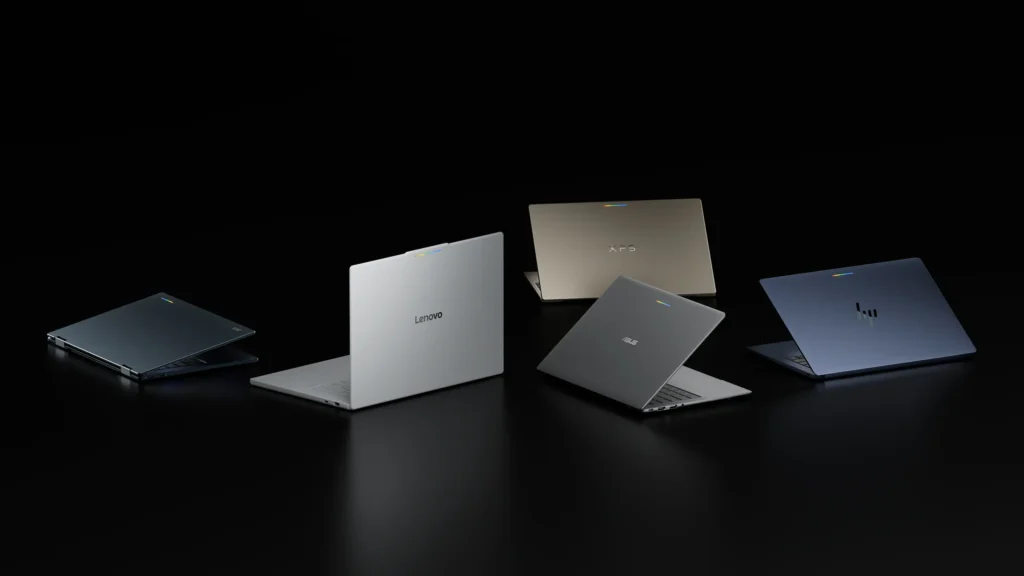
Google has named five launch partners: Acer, ASUS, Dell, HP and Lenovo. Six retail devices from those five companies have already surfaced — through Energy Star certifications, Bluetooth SIG registrations, Geekbench entries, European retailer databases and Chromium development board commits.
This is the lineup most likely to be sitting on the demo tables in New York.
| Device | Codename | Chip | Memory | Display |
|---|---|---|---|---|
| ASUS Googlebook CX9406 | Lapis | Intel Core Ultra 7 355 (Panther Lake) | Up to 64GB LPDDR5X | Not confirmed; sub-1kg ceramic-alloy chassis |
| Acer Googlebook 14 GP714-91N | Moonstone | Intel Core Ultra 5 325 or Core Ultra 7 | 16GB or 32GB | 14-inch 2.8K OLED, 120Hz |
| Lenovo Googlebook i (15″, 12) / GB 15IPH12 | Ruby | Intel Core Ultra 5 325 | 16GB | 15.3-inch high-resolution |
| Lenovo Googlebook Duet m (13″, 11) | Sapphire | MediaTek Kompanio Ultra 910 | Not confirmed | 13-inch detachable tablet |
| HP Googlebook 14c | Quartz | Qualcomm Snapdragon X Elite X1E-80-100 | 32GB | Not confirmed |
| Dell XPS 13 DX13267 | Mica | Qualcomm Snapdragon X Elite X1E-80-100 | 16GB or 32GB | 13.4-inch OLED touchscreen |
All three silicon vendors Google named in May are represented here — Intel, Qualcomm and MediaTek — which is the clearest confirmation yet that the platform is genuinely architecture-agnostic rather than Intel-first with ARM to follow.
A caveat we would not skip past: none of these product names or specifications are official. Google has confirmed nothing, and configurations routinely shift between certification and retail. Treat the table as the shape of the launch, not the spec sheet.
One figure also refuses to line up. Some reporting puts the count at eight devices, including tablets. The certification trail accounts for six. Both can be true if Google demos hardware that has not reached certification, or if accessories are being folded into the count — Googlebook mice and pens are known to be in development. We would not treat either number as settled until the keynote.
September 15 Is Not the Day You Can Buy One
This is the detail getting lost in most of today’s coverage, and it changes the calculus if you are planning a purchase.
September 15 is a media preview. Google’s only public commitment on availability remains “this fall.” A European retailer listing for the Acer Googlebook 14 GP714-91N has carried a November 8, 2026 date — one listing, in one region, and the kind of placeholder that moves. It is also the only retail date anywhere in public.
History points both ways. Chromebook Plus was announced in early October 2023 and reached shelves within days. The first Snapdragon X laptops, by contrast, were previewed months ahead of shipping. Our read is that six to eight weeks is the sensible expectation, which puts the first Googlebooks in US retail in late October or early November.
Will Aluminium OS Finally Get Its Real Name
Google has never once called this operating system Aluminium OS in public. The name traces to the internal project codename “Aluminium” and turns up in Chromium source, Energy Star certification entries and leaked build listings. Google has confirmed only that it is a codename and that the real name will arrive later in 2026.
A keynote billed as introducing “the new computing platform” is the natural place for that reveal, and it is the single most consequential item on the agenda. Everything Google has said about Googlebook so far describes hardware. The OS name is what tells you whether Google is framing this as an Android variant, a ChromeOS successor, or a clean-sheet brand — and that framing will govern how OEMs, IT buyers and schools talk about the platform for the next five years.
How Googlebook Compares to Chromebook Plus and Its Rivals
Googlebook sits above Chromebook Plus, which currently runs from roughly $499 to $999. Bloomberg has reported that the first Googlebooks could start above $999 — pricing that puts them opposite the MacBook Air and Copilot+ Windows machines rather than opposite cheap Chromebooks.
| Chromebook Plus | Googlebook (first wave) | Copilot+ PC | |
|---|---|---|---|
| Operating system | ChromeOS | Android-based, name unconfirmed | Windows 11 |
| AI layer | Gemini as an app and sidebar | Gemini is built into the OS, plus Magic Pointer | Copilot, Recall |
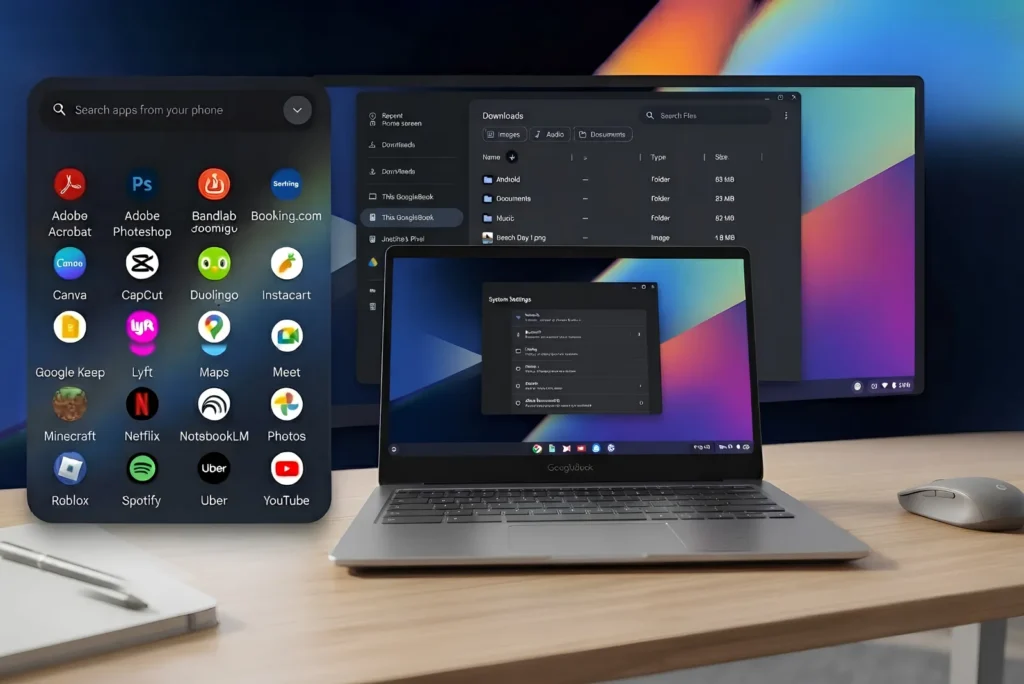
| Android apps | Via a container | Native | Not supported |
| Typical price | $499–$999 | Reportedly above $999 | $799–$1,499 |
| Signature hardware | Dedicated Quick Insert key | Glowbar light strip, Gemini keys | Copilot key |
Two Googlebook features have no Chromebook Plus equivalent. Magic Pointer, built with Google DeepMind, turns the cursor into a context engine — hover it over a date in an email, and it offers to build the calendar entry. Create Your Widget lets you describe a widget to Gemini and have it assembled. Google demonstrated both at The Android Show: I/O Edition on May 12, 2026, calling Googlebooks “the first laptops built from the ground up for Gemini Intelligence”.
The Glowbar — the lit strip across the lid visible in the ASUS and Lenovo renders — looks like the same HiLight LED element Google shipped on the Pixel 11 Pro and the Google Home Speaker. Google has confirmed it as a shared design signature across every Googlebook but has not said what it actually does. Notification states are the obvious guess; Gemini activity is the more interesting one.
What This Means for Buyers in India
Nothing has been confirmed for India. No launch date, no pricing, no retail partners. Any rupee figure circulating today is an estimate, not a leak, and we would treat every one of them as such.
The outlook is still worth setting out. Google’s own laptop hardware has historically reached India late and thin — the premium Chromebook tier barely exists in Indian retail at all. But Googlebook ships through Acer, ASUS, Dell, HP and Lenovo rather than through Google directly, and all five have deep Indian distribution. That is the strongest structural reason to expect these machines here, and it is what separates Googlebook from the Pixelbook line that never arrived.
Price is the harder problem. A device starting above $999 lands near ₹1,00,000 before duty and channel margin, which puts it against the MacBook Air and above most of the Windows thin-and-light market Indian buyers actually shop. The ongoing surge in memory prices is pushing the whole industry upward at precisely the wrong moment for a new premium category to establish itself.
The version of Googlebook that would genuinely sell in India is the one that comes later. Google has confirmed a mid-range tier is planned, and Snapdragon X Plus development boards codenamed Annite and Pic have already appeared in Chromium — silicon that lands in the $599 to $799 bracket in Windows machines. That is the tier worth waiting for if you are buying in India.
What Google Still Has Not Answered
- Pricing. Not a single Googlebook price has been announced by Google or any of the five partners.
- Regional availability. No market list beyond the United States has been indicated.
- Linux app support. ChromeOS runs Linux apps through Crostini. Whether the new platform does is unaddressed, and it is a live question for every developer using a Chromebook today.
- Education and enterprise management. Chromebooks own US K-12 on the strength of admin tooling. Googlebook has not announced managed mode.
- Which Chromebooks upgrade. Google says many Chromebooks will be eligible to move to the new experience. It has never published a list.
- Offline behaviour. Magic Pointer’s stronger functions appear to need a connection. What works on a plane is undefined.
Do Chromebooks Go Away
No. Google has committed to supporting every existing Chromebook through its full update window, continuing investment in the Chromebook experience, and shipping new Chromebooks after Googlebook launches. A Chromebook bought in 2024 keeps its automatic update commitment no matter what happens on September 15.
The strategic direction is still unmistakable. Google’s premium energy has moved, and Googlebook is where the new features land first. But there is no reason to replace a working Chromebook on the strength of an event invitation.
Frequently Asked Questions
When is the Googlebook event?
The Googlebook media preview takes place on Tuesday, September 15, 2026, in New York City. Google has not announced a start time.
Will the Googlebook event be livestreamed?
Google has not confirmed a livestream. The invitation describes an in-person media preview, and as of August 19, 2026, no public stream has been announced.
Can I buy a Googlebook on September 15?
No. The September 15, 2026, event is a media preview, not a retail launch. Google has committed only to devices arriving in fall 2026.
Is Aluminium OS the real name of the Googlebook operating system?
No. Aluminium OS is a codename taken from Chromium code and certification filings. Google has said the official name will arrive later in 2026, and the September 15 keynote is the most likely moment.
Which companies are making the first Googlebooks?
Acer, ASUS, Dell, HP and Lenovo are the five confirmed launch partners. Six retail devices from those five companies have been identified in certification databases.
How much will a Googlebook cost?
Google has not announced pricing. Bloomberg has reported that the first Googlebooks could start above $999, which would place them above the current Chromebook Plus range of roughly $499 to $999.
Will Googlebook launch in India?
Google has not confirmed Indian availability, pricing or a launch date. All five hardware partners have established Indian distribution, but no Indian launch has been announced.
Does Googlebook replace Chromebook?
No. Google has committed to supporting existing Chromebooks through their full update windows and to releasing new Chromebooks after Googlebook launches.