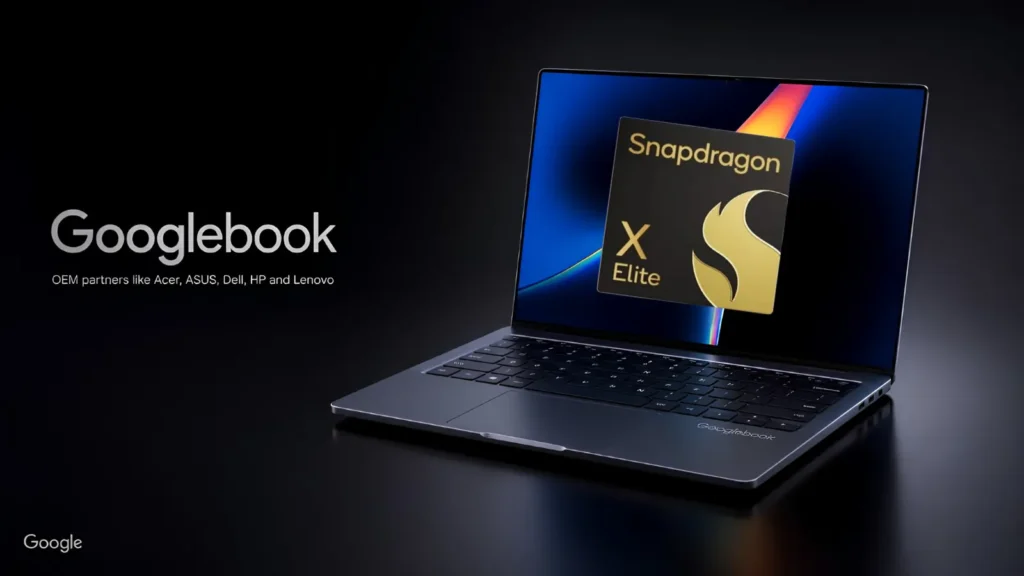
Google’s plan to revolutionize desktop computing just got exposed—accidentally. Two screen recordings posted to a public bug report have given the tech world its first real glimpse of Aluminium OS, the Android-based operating system that’s meant to replace ChromeOS and finally challenge Windows and macOS on their home turf.
The leak matters because it confirms what many suspected: Google is betting its desktop future on Android, not ChromeOS. For the millions using Chromebooks in schools and offices, this signals a fundamental shift in how Google approaches desktop computing. And based on what’s visible in these recordings, that shift is already taking shape.
Table of Contents
What the Videos Reveal
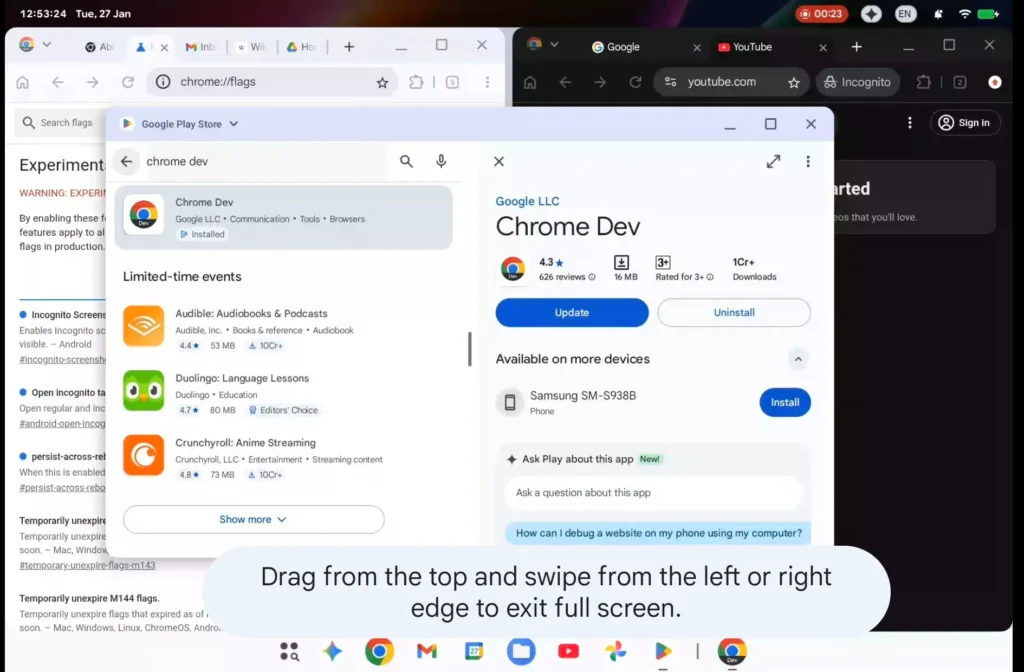
The recordings, spotted by 9to5Google before Google restricted access to the bug report, show Aluminium OS running on an HP Elite Dragonfly 13.5 Chromebook—existing hardware repurposed for testing the new platform. The build number clearly identifies it as “ALOS” (Aluminium OS) running Android 16, confirming earlier speculation about Google’s codename for the project.
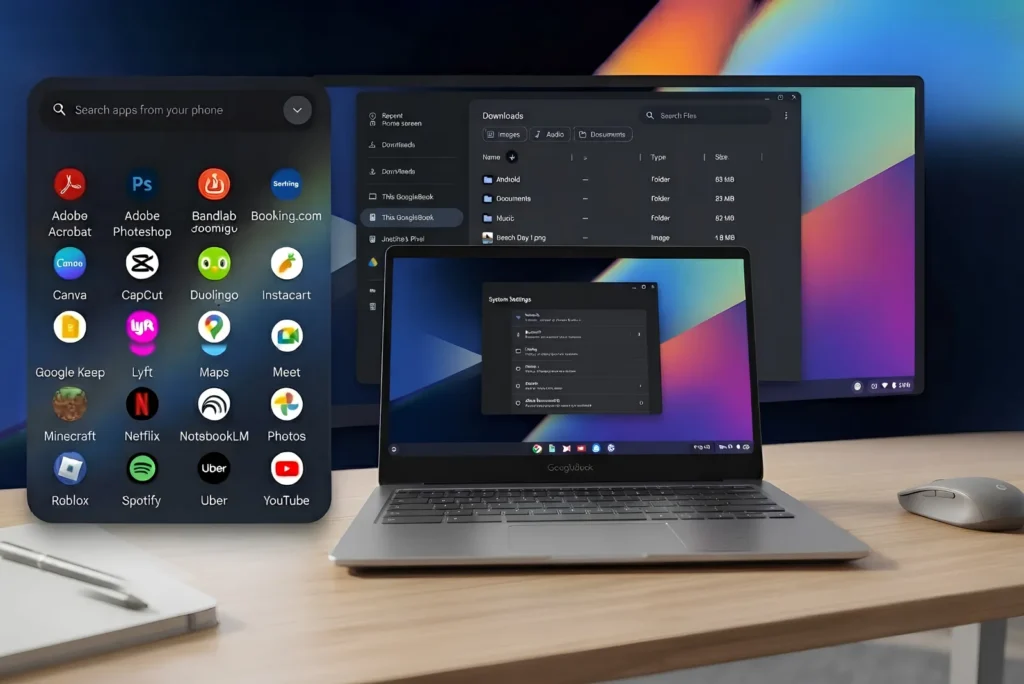
The interface itself represents a marriage of ChromeOS’s desktop sensibilities with Android’s flexibility. The status bar now features a taller, desktop-optimized design with time and date prominently displayed, along with the Android 16 battery and Wi-Fi icons, a Gemini AI icon, and notification indicators. The taskbar shows the start button moved closer to the center—a departure from ChromeOS’s bottom-left placement and more aligned with Android 16’s desktop mode philosophy.
Most significantly, the recordings show Chrome browser windows with extension support, a feature currently exclusive to desktop browsers. Split-screen multitasking works smoothly with two Chrome Dev windows sharing space at a 50-50 ratio, while familiar desktop windowing controls (minimize, fullscreen, close) remain in place.
Why This Matters Now
Google holds just 1.86% of the global desktop market with Chrome OS, though it commands a stronger 8.44% share in the United States, primarily through its dominance in the education sector. Despite shipping 22.11 million Chromebook units globally in 2025, the platform has struggled to break out of its budget-friendly reputation.

Aluminium OS represents Google’s most ambitious attempt yet to change that narrative. Google confirmed earlier this year that it’s building a converged platform for PCs and working with Qualcomm on first-generation hardware. The platform is designed with AI at its core—not just as a feature, but as the fundamental organizing principle of the user experience.
The leaked videos also reveal a practical improvement that Chrome OS users will appreciate: updating Chrome via the Play Store shows an “updating” screen rather than abruptly closing and reopening the browser without warning.
What You Need to Know Going Forward
Google plans to launch Aluminium OS in 2026, though whether that means early or late in the year remains unclear. The company has already begun testing builds on development hardware using both MediaTek and Intel processors, suggesting broad hardware compatibility from launch.
For current Chromebook owners, the transition won’t be immediate. Job listings reveal Google’s intention to maintain “business continuity” as it transitions “from ChromeOS to Aluminium,” indicating that both systems will coexist during a gradual migration period. Internal references to “ChromeOS Classic” suggest older devices may receive legacy support while new hardware ships with Aluminium OS.
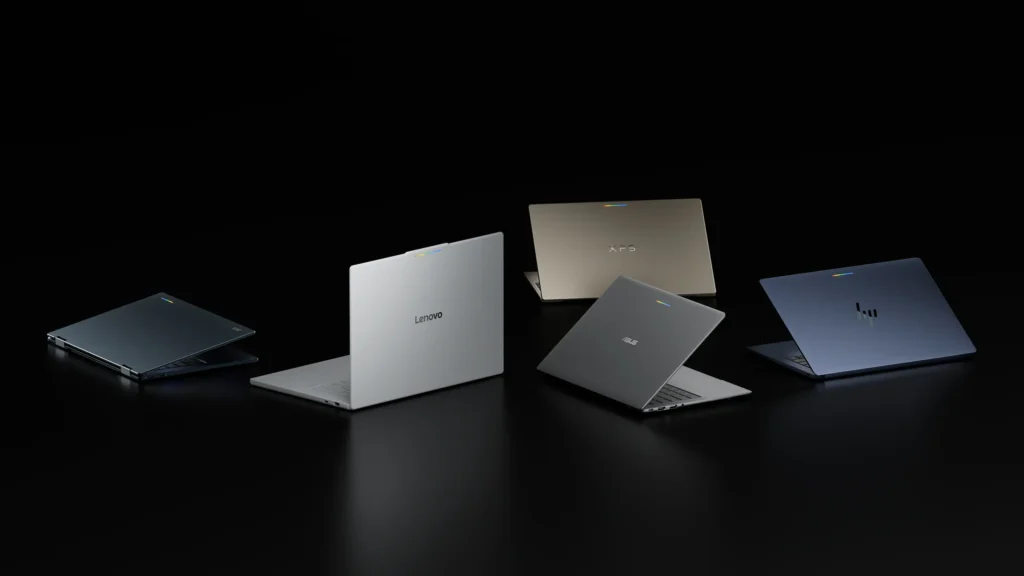
The platform will target multiple device tiers, from entry-level to premium. Job descriptions mention the “AL Mass Premium” and “AL Premium” categories, signaling Google’s ambition to compete in high-end PC markets where Chrome OS has historically struggled. With Google collaborating with Qualcomm to leverage recent AI chip advances, these premium devices could finally offer performance competitive with Windows laptops and MacBooks.
The Bigger Picture
The leak confirms what industry observers have predicted: Google recognizes ChromeOS’s limitations and sees Android as the foundation for its desktop future. With access to over 3 million Android apps, deeper AI integration through Gemini, and the ability to create a truly unified ecosystem across phones, tablets, and computers, Aluminium OS could offer something neither Windows nor macOS currently provides—seamless continuity across all your devices powered by on-device AI.
Whether that vision translates to market success remains to be seen. But if these leaked videos are any indication, Google is serious about making 2026 the year it finally breaks through in desktop computing. The question isn’t whether Aluminium OS is coming—it’s whether users are ready for what Google’s betting will be the future of personal computing.
What this means for you: If you’re considering buying a Chromebook in the next few months, you might want to wait and see what Aluminium OS brings. If you already own one, expect continued support, but start preparing for an eventual platform transition. And if you’ve been waiting for a true alternative to Windows and macOS that integrates seamlessly with your Android phone, 2026 might finally be your year.